

The recent warm days and mild nights have finally coerced even our standard giant trees into showing new tender leaves, leaves as delicate as a newborn baby’s fresh pink skin.Our scaffolding of trees has taken on the soft haze of new leaves.
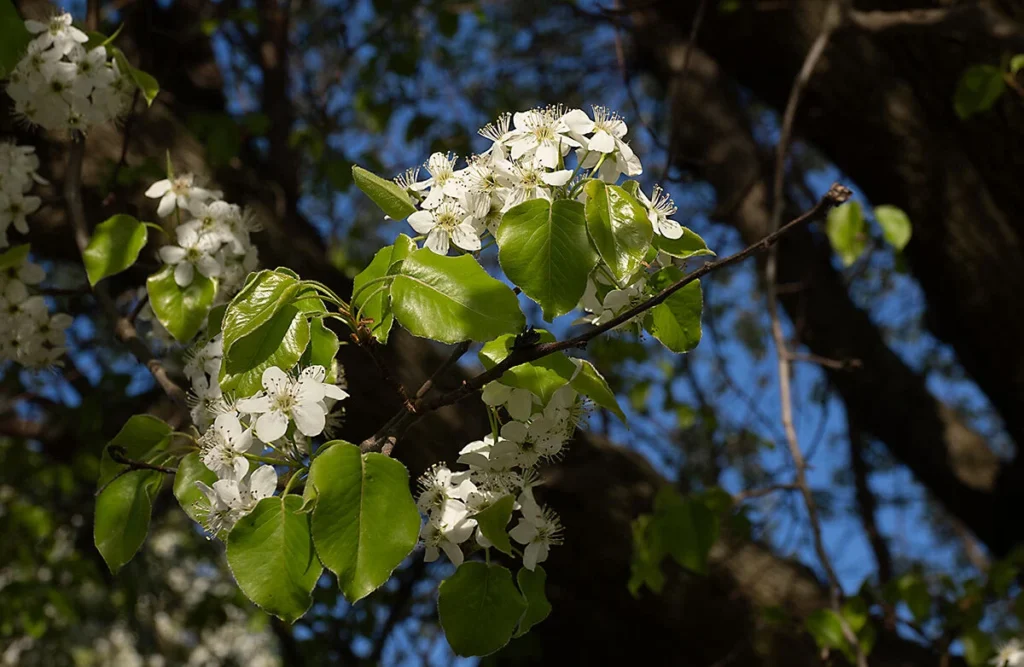
One tree that never hesitates or needs coaxing is the Bradford pear Pyrus calleryana) the Lady Gaga of flowering trees. This tree reaches its peak in March. At the first of the month, it begins to have a dirty brown look, then the white buds unfurl and for two to three weeks we have a spectacular display of blooms that appear to be white puffy clouds from a distance. These blooms are even more intense since other trees have not even thought about spring. When the blooms are gone shiny chartreuse leaves take their place.
The Bradford pear is also called the Callery pear and in the same family are other varieties including ‘Cleveland Select’ also sold as ‘Chanticleer’, Whitehouse and ‘Capital’. The Calleries grow to about 30 feet tall and spread up to 20 feet wide. They grow best in full sun and can accept most soil. They have a formal upright branching form. This deciduous tree has glossy dark green leaves in the summer that turn a bronze, scarlet red in the fall. It is one of the last trees to shed its leaves before winter.
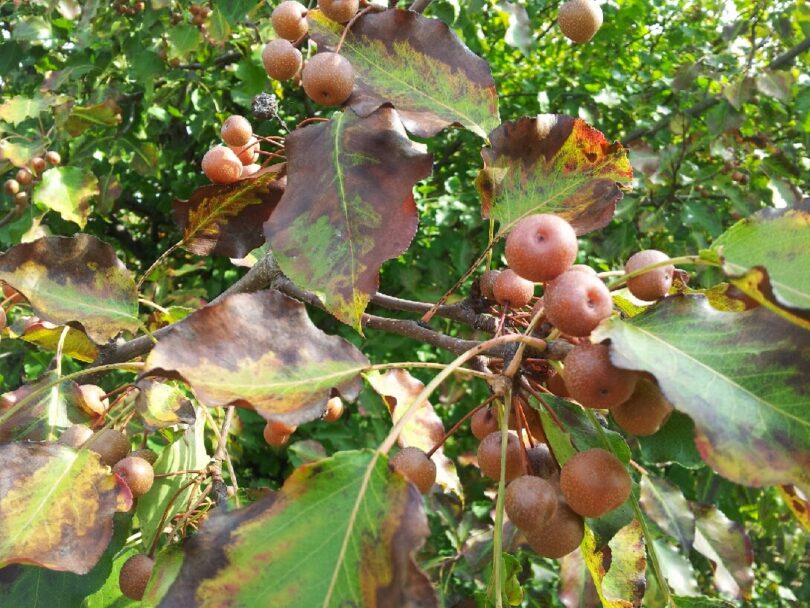
It is also blessed (or unblessed) with small ornamental fruit that is hidden by the leaves that birds love. The Bradford or Callery pear is also highly disease and insect resistant especially to fire blight. This medium size tree (despite its name) is a native of China. Landscapers in the Southeast have loved this tree. We can find it being used extensively in cities, around public buildings, along golf courses and in new de-velopments. It has a classical pyramidal shape that works well with most garden designs.
New real estate developments also love this tree because it has a quick growth pattern reaching maturity in as little as 20 years.
If this tree had been described 50 years ago, we would all be excited. What is not to like about the Bradford pear? It has beautiful spring blooms, dramatic fall color, and small fruit for the birds. It grows quickly, has a symmetrical shape, thrives in urban areas, and is resistant to disease. Then the other shoe drops, because of its rapid growth Bradford pears put out multiple branches at each crotch. These multiple branches make the wood at these points weak. Instead of being solid wood most of the material between the branch and main trunk is called “included wood” making a very fragile junction. Now we have a tree with weak limbs and dense foliage so that when a storm arrives the branches act like the sail in heavy winds and these trees will split in half. After storm damage occurs the trees look awful with a ruined shape. They are also becoming mundane from over-use and the average life without pruning is an estimated twenty-five years.
Another common complaint is that they have an extremely odoriferous aroma when in bloom.
Everywhere you go you see these trees planted and not just by people. The birds help to deposit the seeds, and you end up with Bradford pear trees in wild areas where they shouldn’t be. Driving along the interstate you see them sprouting when the land is left fallow. This tree has landed itself on the Tennessee Exotic Pest Plant Council’s watch list of invasive plants. That’s reason enough for me not to plant it in my yard!
There are lots of beautiful small trees that you can plant and enjoy other than Bradford pears among them are: Serviceberry (Amelanchier), Flowering Dogwood (Cornus florida), Redbud ‘Royal White’ (Cercis Canadensis) and Yoshino cherry. Like Lady Gaga’s meat dress I don’t want to see this tree anvwhere. I hope you will choose a native tree for your gardens.